Mihintale
The Sacred Cradle of Buddhism in Sri Lanka
Ascend the holy mountain where Buddhism first touched Sri Lankan soil which is Mihintale, the most sacred pilgrimage site in the country and the birthplace of a spiritual tradition that has flourished for over 2,300 years. This extraordinary complex of ancient monasteries, stupas, and meditation caves scattered across a granite peak rises 300 meters above the plains near Anuradhapura, marking the exact spot where Mahinda Thera, son of Emperor Ashoka, first preached the Buddha's teachings to King Devanampiyatissa in 247 BCE. More than just an archaeological site, Mihintale is a living testament to spiritual transformation, where thousands of pilgrims climb 1,840 ancient stone steps during full moon nights, where meditation caves carved into living rock still echo with centuries of contemplation, and where the very landscape seems imbued with the profound peace that changed the course of an entire civilization.
What Makes Mihintale Extraordinary
Mihintale represents the sacred geography of enlightenment which is a place where every rock, cave, and ancient structure tells the story of Buddhism's arrival and flourishing in Sri Lanka. This isn't merely a collection of ruins but a carefully planned monastic complex that functioned as the spiritual heart of ancient Ceylon, where over 2,000 monks once lived, studied, and meditated in harmony with the natural landscape. The site's extraordinary preservation allows visitors to experience Buddhism as it was practiced in ancient times: climbing the same stone steps worn smooth by millions of pilgrims, meditating in caves where ancient monks achieved enlightenment, and standing at the exact spot where a king embraced a new faith that would define his kingdom's identity for millennia. The complex encompasses multiple peaks and terraces, each serving specific monastic functions from grand ceremonial stupas that housed sacred relics to intimate meditation retreats carved into cliff faces. What makes Mihintale truly extraordinary is how seamlessly human spiritual architecture integrates with dramatic natural beauty: ancient stupas crown rocky summits like man-made mountains, while meditation caves nestle into granite outcrops as if the rock itself was designed for contemplation. The monsoon rains that transform the landscape into emerald green during pilgrimage season, the panoramic views that stretch to the ancient capital of Anuradhapura, and the profound silence that settles over the mountain create an atmosphere where visitors naturally understand why this place became the wellspring of Sri Lankan Buddhism.
Historical Significance
Mihintale's sacred history begins with one of the most pivotal moments in Sri Lankan civilization: the meeting between Mahinda Thera and King Devanampiyatissa on Poson Full Moon Day in 247 BCE. According to the Mahavamsa chronicle, Mahinda tested the king's intelligence with riddles about a mango tree, and finding him worthy, delivered the first Buddhist sermon on Sri Lankan soil at the spot now marked by the Ambasthala Dagoba. The king's immediate conversion and subsequent establishment of Buddhism as the state religion transformed not only Mihintale but the entire island's cultural trajectory. Within decades, the mountain became a thriving monastic center with elaborate monasteries, hospitals, and educational institutions that attracted scholars from across the Buddhist world. Archaeological evidence reveals a sophisticated urban planning system with carefully engineered water supply systems, residential quarters for different ranks of monks, and specialized buildings for various monastic functions. The complex reached its zenith during the Anuradhapura period (3rd century BCE to 10th century CE), when royal patronage funded massive construction projects including the great stupas that dominate the skyline today. Kings regularly climbed Mihintale for spiritual guidance, while common people made pilgrimages that established traditions continuing unbroken to the present day. The site survived the political upheavals that led to Anuradhapura's abandonment, though many structures fell into ruin during periods of foreign invasion and political instability. British colonial administrators recognized Mihintale's archaeological importance, beginning systematic excavations and conservation efforts that revealed the site's true scale and significance. Post-independence Sri Lanka has invested heavily in restoration and preservation, making Mihintale a model for heritage conservation that balances archaeological integrity with continuing religious use, ensuring that this sacred mountain remains both a window into ancient Buddhist civilization and a living center of contemporary spiritual practice.
Must-Experience Wonders
The Grand Stairway - Pilgrimage Path of Devotion
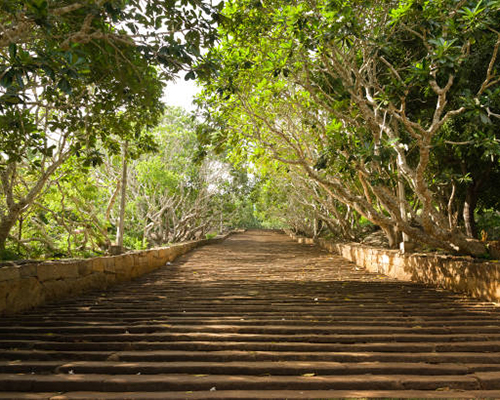
The ancient stone stairway of 1,840 steps represents one of the world's great pilgrimage experiences, climbing through multiple terraces and historical periods toward spiritual enlightenment. Beginning at the base with wide, ceremonial steps that accommodate thousands of pilgrims during Poson celebrations, the stairway gradually narrows as it ascends through different zones of the monastic complex. Each section reveals different aspects of ancient monastic life: residential areas with monks' quarters carved into rock faces, ceremonial platforms where religious gatherings occurred, and meditation terraces offering increasingly spectacular views. The engineering achievement is remarkable as these steps were carved from granite and fitted without mortar, have supported millions of pilgrims over 2,000 years while maintaining their structural integrity. The physical challenge of the climb, especially during hot tropical weather, creates a natural meditation on determination and spiritual aspiration that pilgrims have experienced for over two millennia.
Ambasthala Dagoba - The Sacred Spot of First Teaching
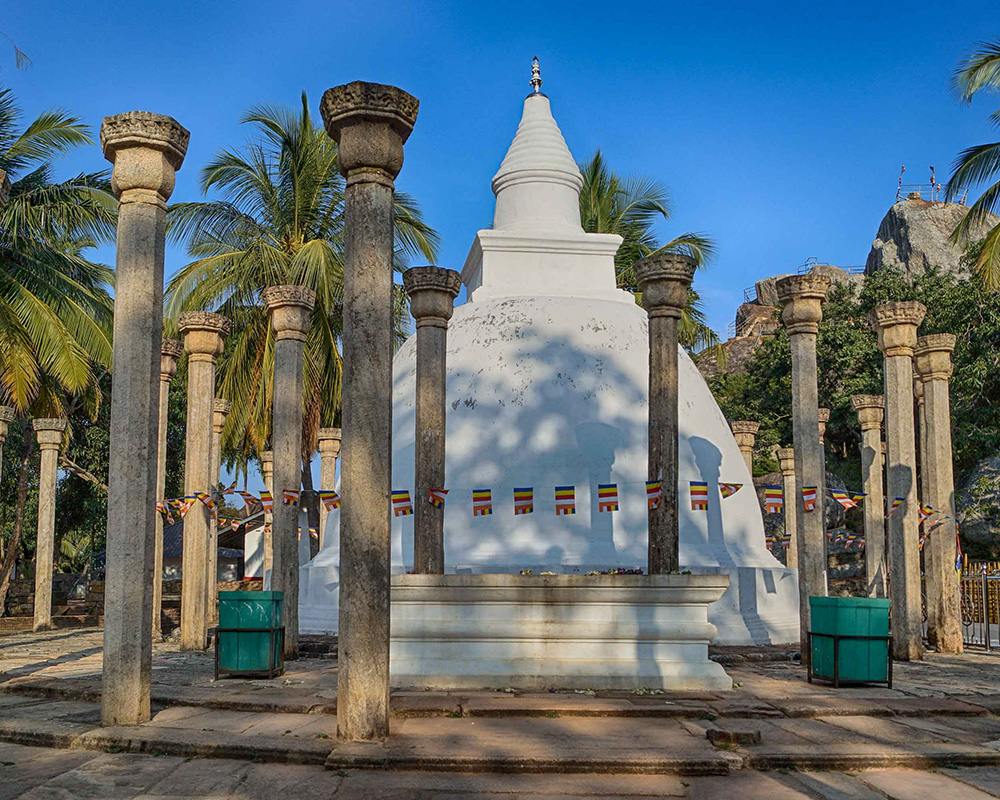
This white-domed stupa marks the exact location where Mahinda Thera delivered Buddhism's first sermon in Sri Lanka, making it the most sacred spot in the country for Buddhist pilgrims. The current structure, rebuilt multiple times over the centuries, stands 30 feet high on a platform that offers commanding views across the plains toward Anuradhapura. Archaeological excavations have revealed earlier structures beneath the current dagoba, suggesting continuous veneration of this site since the 3rd century BCE. The stupa's design follows classical Buddhist architectural principles, with its dome representing the cosmic egg of creation and its spire pointing toward enlightenment. Pilgrims traditionally offer flowers, light oil lamps, and perform circumambulation while contemplating the moment when their ancestors first heard the Buddha's teachings. The peaceful atmosphere, enhanced by ancient trees and natural rock formations, creates an environment conducive to meditation and spiritual reflection.
Mihintale Dagoba - The Great Stupa Complex
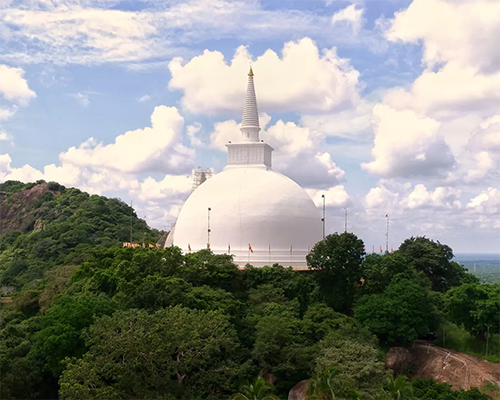
Crowning the highest peak, this massive dagoba complex demonstrates the architectural ambitions of ancient Sinhalese Buddhism, featuring a main stupa 130 feet in diameter surrounded by smaller shrine rooms and meditation halls. The structure required enormous resources and sophisticated engineering to transport materials up the steep mountain, demonstrating the importance placed on creating worthy monuments to house sacred relics. The platform surrounding the main stupa provides 360-degree panoramic views encompassing Anuradhapura's ancient stupas, the vast Tissawewa reservoir, and agricultural plains that stretch to the horizon. Four smaller dagobas at the cardinal points create a mandala-like arrangement that reflects Buddhist cosmological principles, while surrounding ruins indicate extensive monastery buildings that once housed hundreds of monks. The site's elevation and openness to sky and wind create a naturally transcendent atmosphere that enhances meditation and contemplation.
Ancient Hospital Complex - Healing and Compassion
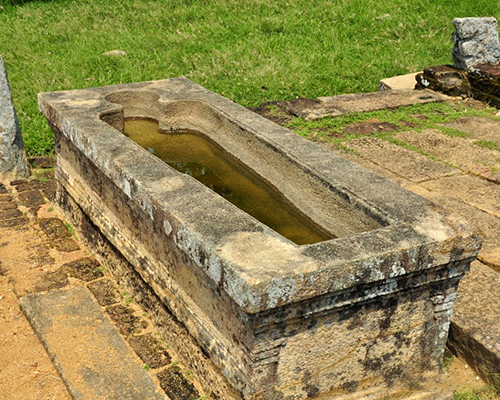
The remarkably preserved ruins of Mihintale's ancient hospital demonstrate Buddhism's emphasis on compassion and healing, featuring sophisticated medical facilities that provided healthcare to monks and laypeople alike. The complex includes specialized buildings for different types of treatment, stone medicine containers with Sanskrit and Sinhala inscriptions identifying various remedies, and surgical instruments that reveal advanced medical knowledge. Archaeological evidence suggests the hospital operated continuously for over 1,000 years, with monks serving as both spiritual teachers and medical practitioners who treated patients using traditional Ayurvedic methods combined with Buddhist healing practices. The facility's design incorporates principles of therapeutic architecture, with gardens for medicinal plants, water features for purification rituals, and peaceful courtyards that supported patient recovery through environmental harmony.
Cultural Experiences & Living Heritage
Poson Festival Pilgrimage
Experience Sri Lanka's most important Buddhist celebration during the full moon of June, when hundreds of thousands of pilgrims climb Mihintale throughout the night in a tradition unchanged for over 2,000 years. The festival recreates the original meeting between Mahinda Thera and King Devanampiyatissa through elaborate pageants, religious dramas, and ceremonial processions that transform the entire mountain into a living tableau of Buddhist history. Participants carry oil lamps that create rivers of light flowing up the ancient stairway, while traditional drumming, chanting, and flower offerings create a profoundly moving spiritual atmosphere.
Transportation & Access from Major Cities
From Anuradhapura
13 km via A12 highway (20 minutes), perfect for combining ancient capital exploration.
From Colombo
205 km via A1 and A12 highways (4 hours), feasible for dedicated day trips or Cultural Triangle circuits.
From Kandy
110 km via A9 and A12 highways (2.5 hours), excellent for hill country combinations.
From Dambulla
68 km via A9 and A12 highways (1.5 hours), convenient for Cultural Triangle touring.
From Sigiriya
87 km via A9 and A12 highways (2 hours), popular combination for archaeological enthusiasts.
Dining Experiences
Pilgrimage Trail Food
Simple meals served to devotees during religious festivals and ceremonies.
Village Home Cooking
Family-style meals prepared using traditional methods and locally sourced ingredients.
Anuradhapura Restaurant Extensions
Day trip combinations allowing exploration of nearby dining opportunities.
Festival Food Stalls
Traditional snacks and refreshments available during major religious celebrations.
Authentic Shopping & Souvenirs
Religious Artifacts & Spiritual Items
Buddha Statue Replicas
Hand-carved wooden and stone reproductions of Mihintale's famous Buddhist sculptures.
Prayer Beads and Malas
Traditional meditation accessories blessed by monks at sacred sites.
Incense and Religious Supplies
Traditional incense, oil lamps, and ceremonial items used in Buddhist worship.
Palm Leaf Manuscripts
Replicas of ancient Buddhist texts and teachings written on traditional materials.
Blessed Amulets
Traditional protective charms and spiritual items consecrated at sacred locations.
Cultural Crafts & Heritage Items
Traditional Stone Carvings
Miniature reproductions of architectural elements and decorative motifs.
Handwoven Textiles
Village-produced fabrics featuring Buddhist symbols and traditional patterns.
Ayurvedic Products
Natural remedies and treatments using herbs cultivated in monastery gardens.
Traditional Masks
Handcrafted ceremonial masks representing characters from Buddhist folk traditions.
Best Times to Visit & Seasonal Highlights
Optimal Pilgrimage and Exploration Conditions
Early Morning (5:00-8:00 AM)
Cool temperatures for climbing, peaceful atmosphere, optimal lighting for photography.
Late Afternoon (4:00-6:00 PM)
Comfortable temperatures, dramatic sunset views, evening prayer opportunities.
Dry Season (May-September)
Clear skies, stable weather, excellent visibility for panoramic views.
Poson Full Moon (June)
Most significant religious celebration with authentic pilgrimage experiences.
Seasonal Religious and Cultural Highlights
Full Moon Days (Monthly)
Traditional pilgrimage activities and authentic spiritual ceremonies.
Buddhist New Year (April)
Special observances combining cultural traditions with religious practice.
Vesak Festival (May)
Celebration of Lord Buddha's birth, enlightenment, and death with special ceremonies.
Monsoon Season Meditation
Fewer crowds and enhanced natural beauty for contemplative experiences.
Seasonal Considerations
Monsoon Season (October-January)
Occasional afternoon showers but fewer tourists and enhanced natural beauty.
Peak Pilgrimage Season (June-July)
Authentic cultural experiences but larger crowds requiring early arrival.
Hot Season (February-April)
Extreme temperatures requiring very early morning climbs and extensive hydration.
Visitor Guidelines & Practical Information
Entry Requirements & Logistics
Climbing Duration
1-2 hours to reach summit; 3-4 hours for comprehensive exploration of all sites.
Physical Requirements
Good fitness level essential; 1,840 steps involve significant physical challenge.
Age Considerations
Not recommended for elderly visitors or those with heart conditions without medical clearance.
Safety & Preparation Guidelines
Footwear
Sturdy shoes with excellent grip essential; some areas require bare feet near religious structures.
Hydration
Carry ample water; tropical climbing conditions require constant fluid replacement.
Sun Protection
Hat, sunscreen, and protective clothing essential for extended outdoor exposure.
Cultural Respect & Religious Protocol
Dress Code
Modest white or light-colored clothing preferred; shoulders and knees must be covered.
Temple Etiquette
Remove shoes and hats near religious structures; maintain quiet, respectful behavior.
Photography Guidelines
Respectful photography permitted; flash restrictions near ancient paintings and ceremonies.
Pilgrimage Respect
Show courtesy to religious pilgrims; avoid blocking ceremonial pathways during festivals.
Insider Tips from Dream Lanka Holidays
Sacred Experiences & Hidden Gems
Pre-Dawn Climbs
Arriving before sunrise allows solitary meditation experiences impossible during busy periods.
Meditation Cave Selection
Guidance to lesser-known caves offering optimal conditions for contemplative practice.
Professional Photography and Documentation
Cultural Photography Ethics
Guidelines for respectfully documenting religious ceremonies and pilgrimage activities.
Seasonal Lighting Mastery
Optimal times and positions for capturing ancient architecture in dramatic natural lighting.
Comprehensive FAQ
Experience Mihintale with Dream Lanka Holidays
Journey to the sacred birthplace of Sri Lankan Buddhism with our expert guides who transform ancient monastery ruins into vivid stories of spiritual transformation, royal conversion, and the establishment of a religious tradition that has flourished for over 2,300 years. Our specialized Mihintale experiences combine historical expertise with spiritual insight, ensuring you understand not just the archaeological significance but the profound religious meaning that continues to draw pilgrims from across the world.
We provide access to experiences that casual visitors often miss: opportunities to participate in traditional pilgrimage practices, and connections with contemporary Buddhist teachers who maintain living traditions in these sacred spaces. Our guides, trained in both Buddhist history and contemplative practices, help you appreciate the sophisticated monastic civilization that flourished here while experiencing the natural spiritual atmosphere that made this mountain the perfect setting for Buddhism's arrival in Sri Lanka.
From practical guidance about optimal climbing strategies to profound insights about Buddhist philosophy, let Dream Lanka Holidays guide you through Mihintale's sacred landscape. Experience the birthplace of Sri Lankan Buddhism where ancient wisdom continues to inspire, where every stone step connects you to millions of pilgrims who have made this journey before you, and where the very rocks seem to whisper the timeless teachings that transformed a kingdom and continue to offer peace and insight to all who climb toward enlightenment.