Anuradhapura
The Sacred Ancient Capital of Sri Lanka
Journey to the spiritual heart of Sri Lankan civilization at Anuradhapura, the magnificent ancient capital that served as the island's political and religious center for over 1,400 years. This UNESCO World Heritage Site encompasses 40 square kilometers of extraordinary archaeological treasures, where colossal stupas rise like white mountains from emerald plains, ancient monasteries house thousands of years of Buddhist heritage, and sacred trees connect the present to the very origins of Buddhism in Sri Lanka. More than just ruins, Anuradhapura is a living testament to faith and achievement a place where ancient kings built a sacred city that remains one of the world's greatest pilgrimage destinations, where millions still come to worship at shrines that have blessed devotees for over two millennia.
What Makes Anuradhapura Extraordinary
Anuradhapura represents the longest continuously inhabited ancient city in Asia, where 113 kings ruled from 377 BCE to 1017 CE, creating a civilization that combined spiritual devotion with architectural magnificence on an unprecedented scale. This isn't merely an archaeological site; it's a sacred landscape where massive stupas built over 2,000 years ago still dwarf modern buildings, where the world's oldest recorded tree continues to flourish after 2,300 years, and where ancient irrigation systems demonstrate engineering prowess that sustained a population of millions in the heart of the dry zone. The scale is overwhelming: the Jetavanaramaya stupa was once the world's third-tallest structure, rising 400 feet above the plains; the ancient city sprawled across 40 square kilometers with sophisticated urban planning that included hospitals, universities, and parks; and the irrigation network featured reservoirs so vast they were called "seas" by ancient chroniclers. What makes Anuradhapura truly extraordinary is how seamlessly it blends archaeological wonder with living religious practice. The ancient stupas still receive daily offerings, sacred trees are venerated by pilgrims from across the Buddhist world, and monastery ruins echo with the chanting of modern monks who maintain traditions established over two millennia ago.
Historical Significance
Anuradhapura's sacred history begins in 377 BCE when King Pandukabhaya established the city as his capital, but its transformation into Buddhism's greatest stronghold occurred in 247 BCE when Mahinda Thera arrived from India carrying Lord Buddha's teachings and a sapling from the sacred Bodhi Tree under which Lord Buddha achieved enlightenment. The planting of this sacred tree, known as the Sri Maha Bodhi, marked the beginning of an extraordinary era of religious architecture and royal patronage that created monuments rivaling the greatest achievements of ancient civilization. Under King Devanampiyatissa, who embraced Buddhism and began the first great building projects, Anuradhapura became the spiritual center of Theravada Buddhism, attracting pilgrims, scholars, and monks from across Asia. Successive kings competed to build ever-greater stupas and monasteries: King Dutugemunu constructed the Ruwanwelisaya, King Mahasena built the Jetavanaramaya, and dozens of rulers added temples, hospitals, and universities that made Anuradhapura one of the world's greatest ancient cities. The city's sophisticated irrigation system, featuring massive reservoirs like the Tissawewa and Basawakkulama, supported a population estimated at over one million people in an arid region where such numbers seemed impossible. Political upheavals and South Indian invasions periodically threatened the city, but its religious significance ensured continuous restoration and reverence. When the capital finally moved to Polonnaruwa in 1017 CE, Anuradhapura's sacred sites remained active pilgrimage destinations, and today the ancient city experiences a remarkable renaissance as both archaeological treasure and living religious center that continues to inspire millions of devotees and thousands of scholars studying the achievements of one of humanity's greatest ancient civilizations.
Must-Experience Wonders
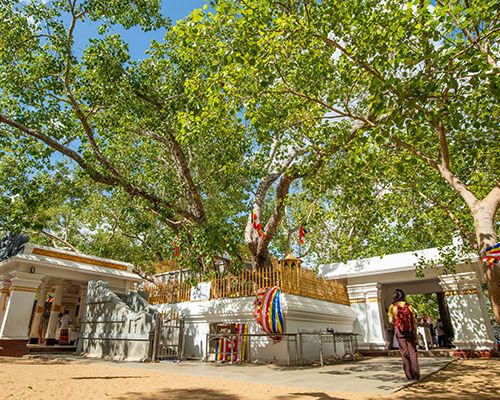
Sri Maha Bodhi
The Sacred Tree of Enlightenment The most sacred site in Sri Lanka, this 2,300-year-old Bodhi Tree grows from a sapling brought directly from the tree under which Lord Buddha achieved enlightenment in Bodh Gaya, India. Planted in 247 BCE by Sanghamitta Theri, Lord Buddha's daughter, this is the oldest historically documented tree in the world and the most venerated religious site in the country. The tree stands within a beautiful complex of terraced platforms built by successive kings, surrounded by golden railings and adorned with colorful prayer flags that flutter in the breeze like butterflies. Pilgrims from across the Buddhist world come here to meditate, make offerings, and experience the profound spiritual energy that emanates from this living connection to Lord Buddha himself. The daily rituals of flower offerings, oil lamp lighting, and chanted prayers create an atmosphere of devotion that has remained unchanged for over two millennia.
Ruwanwelisaya
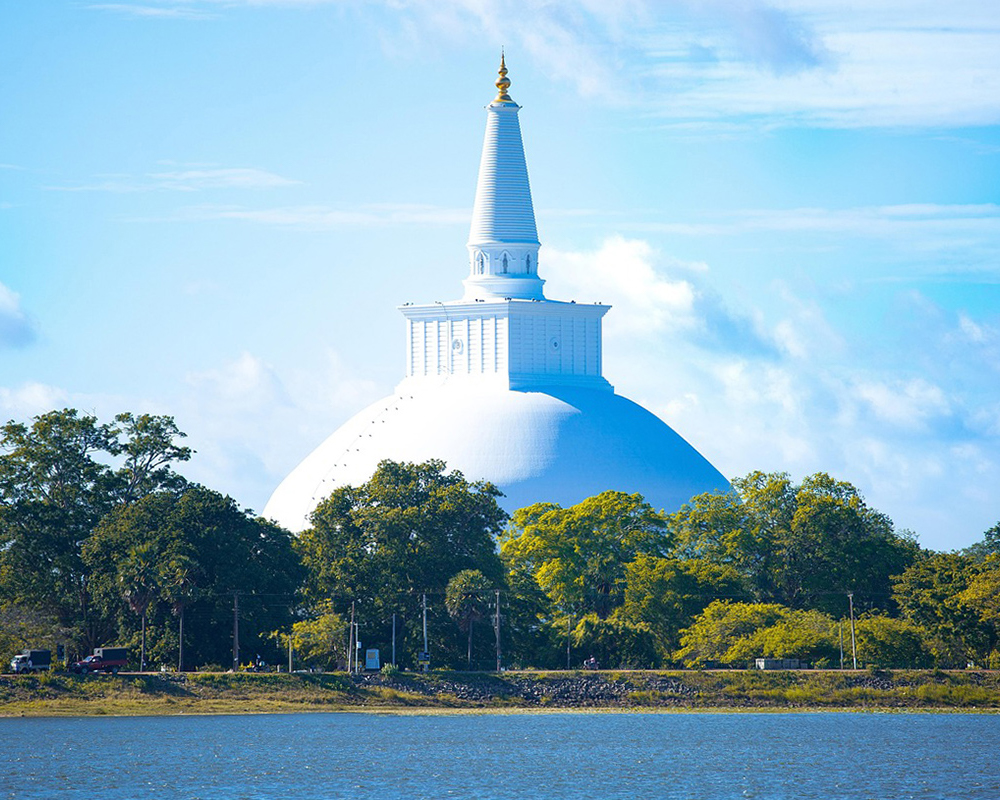
The Great Stupa of King Dutugemunu This magnificent white stupa, rising 300 feet above the ancient city, represents the architectural and spiritual pinnacle of early Buddhist civilization in Sri Lanka. Built by King Dutugemunu in the 2nd century BCE, the stupa enshrines relics of Lord Buddha and demonstrates construction techniques so advanced that the structure has survived earthquakes, invasions, and over 2,000 years of monsoons while maintaining its perfect bell shape. The stupa's base is surrounded by a procession of stone elephants that seem to support the massive dome, while the complex includes beautifully carved guard stones, moonstones, and ceremonial buildings that showcase the artistic sophistication of ancient Sinhalese craftsmen. The four cardinal directions feature shrine rooms where pilgrims can meditate facing the stupa, creating a mandala-like arrangement that reflects Buddhist cosmological principles.
Jetavanaramaya
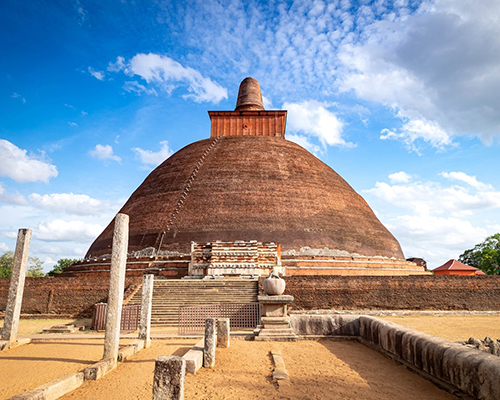
The Ancient Wonder of the World Once the world's third-tallest structure at 400 feet, this colossal stupa built by King Mahasena in the 3rd century CE demonstrates the extraordinary ambition of ancient Sri Lankan civilization. The stupa required over 93 million bricks and represents one of the largest brick structures ever built by humans, covering an area larger than most modern city blocks. Archaeological excavations have revealed sophisticated internal chambers, relic deposits, and construction techniques that allowed ancient builders to create a structure of unprecedented scale without modern engineering tools. The surrounding monastery complex housed 10,000 monks and included meditation halls, libraries, and refectories that made this one of the ancient world's greatest centers of Buddhist learning. Today, the partially restored stupa continues to inspire awe and reverence, while ongoing archaeological work reveals new insights into ancient construction methods and religious practices.
Abhayagiri Monastery
The International Buddhist University This vast monastic complex once housed 5,000 monks and served as an international center of Buddhist learning that attracted scholars from China, India, and Southeast Asia for over 1,000 years. The central stupa, originally 370 feet tall, anchored a sprawling complex of meditation halls, libraries, hospitals, and residential quarters that functioned as both monastery and university. The site's most famous treasure is the remarkably preserved Samadhi Buddha statue, a 4th-century masterpiece of stone carving that depicts Lord Buddha in deep meditation with an expression of perfect serenity that changes subtly with the viewing angle and lighting conditions. The monastery's ruins reveal sophisticated urban planning, with carefully designed drainage systems, ceremonial pathways, and architectural innovations that influenced Buddhist monastery design across Asia.
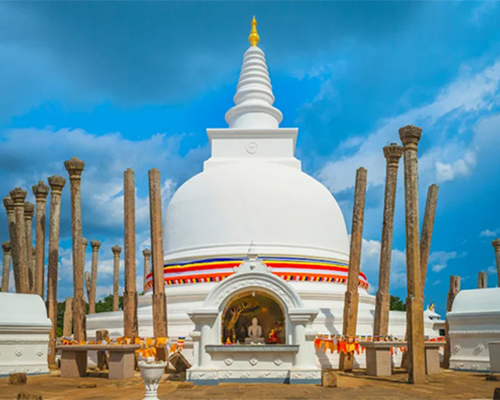
Thuparamaya
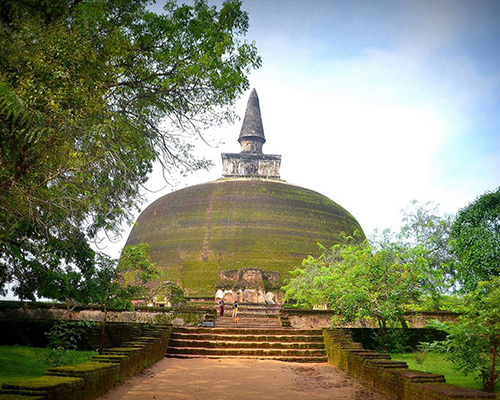
The First Stupa in Sri Lanka Built in the 3rd century BCE by King Devanampiyatissa, this historic stupa holds the distinction of being the first Buddhist monument constructed in Sri Lanka and one of the earliest stupas built outside India. The structure enshrines the collar bone relic of Lord Buddha, making it one of the most sacred sites in the Buddhist world. The stupa's unique architectural design, with its bell-shaped dome surrounded by stone pillars that once supported a circular roof, represents an early example of Sri Lankan adaptation of Indian Buddhist architecture to local conditions. The surrounding complex includes the ruins of ancient image houses, meditation halls, and ceremonial buildings that demonstrate the sophisticated religious architecture that emerged in the earliest period of Sri Lankan Buddhism.
Isurumuniya Temple
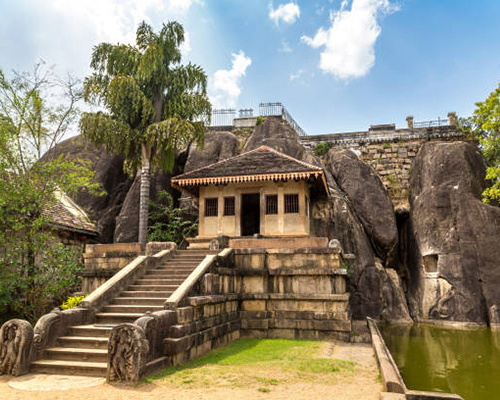
The Lovers' Rock Temple This ancient rock temple, carved into a massive granite boulder, combines natural beauty with exquisite artistic achievement in a setting that feels both intimate and transcendent. Famous for its remarkable stone carvings, including the celebrated "Isurumuniya Lovers" sculpture that depicts a royal couple in tender embrace, the temple showcases the secular as well as religious art of ancient Sri Lanka. The temple's location beside a tranquil lotus pond creates a naturally meditative atmosphere, while the rock-carved chambers house Buddha statues and ancient frescoes that demonstrate the evolution of religious art over centuries. The temple's integration with its natural setting, where massive boulders become architectural elements and natural caves serve as meditation halls, exemplifies the harmony between human creativity and natural beauty that characterizes the finest achievements of ancient Sri Lankan civilization.
Cultural Experiences & Living Heritage
Pilgrimage Ceremonies and Religious Festivals
Experience the profound devotion that has drawn pilgrims to Anuradhapura for over 2,000 years by participating in daily puja ceremonies at the Sri Maha Bodhi, where the ritual of flower offerings, oil lamp lighting, and chanted prayers creates an atmosphere of spiritual transcendence. During full moon days and major Buddhist festivals, thousands of white-clad devotees gather for processions, chanting, and communal meditation that transform the ancient city into a living expression of faith that connects the present to the deepest roots of Sri Lankan Buddhism.
Traditional Craft Workshops
Observe master craftsmen demonstrating traditional techniques for creating religious art, stone carving, and metalwork similar to those used by ancient artisans. Local workshops continue centuries-old traditions of creating Buddha statues, decorative elements, and ceremonial objects using methods passed down through generations of temple builders and religious artists.
Transportation & Access from Major Cities
From Colombo
205 km via A1 highway (4 hours), ideal for Cultural Triangle circuits beginning with the ancient capital
From Kandy
110 km via A9 highway (2.5 hours), perfect for combining hill country exploration with ancient heritage
From Negombo
175 km via A3 and A1 highways (3.5 hours), convenient for airport transfers and coastal combinations
From Polonnaruwa
104 km via A12 highway (2.5 hours), excellent for twin ancient capital exploration
From Mihintale
13 km via A12 highway (20 minutes), essential combination for understanding Buddhism's arrival in Sri Lanka
Dining Experiences
Temple Vegetarian Cuisine
Authentic Buddhist vegetarian meals served at monastery guest houses using traditional recipes.
Village Home Cooking
Family-style meals prepared by local families using traditional clay pots and wood-fired stoves.
Heritage Hotel Dining
Refined cuisine served in colonial-era buildings with views of ancient stupas and sacred sites.
Local Restaurant Specialties
Authentic North Central Province cuisine featuring traditional rice and curry preparations.
Pilgrimage Food Stalls
Simple but nutritious meals served to devotees during religious festivals and ceremonies.
Authentic Shopping & Souvenirs
Religious Artifacts & Sacred Items
Traditional Prayer Beads
Handcrafted meditation malas made from locally sourced materials and blessed at sacred sites.
Religious Texts and Manuscripts
Palm leaf replicas of ancient Buddhist teachings and historical chronicles.
Blessed Amulets and Talismans
Traditional protective items consecrated at Anuradhapura's sacred shrines.
Local Crafts & Cultural Artifacts
Traditional Metalwork
Bronze and brass items crafted using ancient techniques including oil lamps and ceremonial vessels.
Stone Carving Miniatures
Skilled reproductions of famous architectural elements like moonstones and guard stones.
Handwoven Textiles
Traditional fabrics featuring Buddhist symbols and patterns used in religious ceremonies.
Archaeological Publications
Specialized books and research materials about Anuradhapura's history and discoveries.
Best Times to Visit & Seasonal Highlights
Optimal Exploration and Pilgrimage Conditions
Early Morning (5:30-8:30 AM)
Cool temperatures for extensive walking, optimal lighting for photography, peaceful spiritual atmosphere.
Late Afternoon (4:00-6:30 PM)
Comfortable temperatures, dramatic lighting on white stupas, evening prayer ceremonies.
Dry Season (May-September)
Clear skies for optimal visibility, stable weather for extended archaeological exploration.
Cool Season (December-February)
Most comfortable temperatures for full-day ancient city touring.
Seasonal Religious and Cultural Highlights
Poson Full Moon (June)
Celebration of Buddhism's arrival in Sri Lanka with massive pilgrimage gatherings.
Vesak Full Moon (May)
Buddha's birth, enlightenment, and death commemorated with spectacular illuminations.
Esala Full Moon (July)
Traditional ceremonies and processions connecting to ancient royal traditions.
Other Poya Days
Monthl full moon celebrations offering authentic experiences of living Buddhist culture.
Seasonal Considerations
Monsoon Season (October-January)
Occasional afternoon showers but lush green landscapes and fewer crowds.
Peak Pilgrimage Season (May-July)
Authentic religious experiences but larger crowds requiring early morning visits.
Hot Season (February-April)
High temperatures requiring very early starts, extensive sun protection, and frequent hydration.
Visitor Guidelines & Practical Information
Entry Requirements & Logistics
Site Coverage
Allow full day for comprehensive exploration; minimum 6-8 hours for major sacred sites.
Physical Requirements
Extensive walking required; comfortable shoes essential for uneven ancient surfaces.
Age and Accessibility
Most sites accessible to all ages, though extensive walking may challenge elderly visitors.
Safety & Preparation Guidelines
Sun Protection
Essential for extended outdoor exploration; hat, sunscreen, and protective clothing required.
Hydration
Carry ample water; hot, dry climate and extensive walking require constant fluid replacement.
Footwear
Comfortable walking shoes that can be easily removed for temple entry; bare feet required at sacred sites.
Weather Preparation
Light rain protection during monsoon months; umbrella useful for both sun and rain.
Cultural Respect & Religious Protocol
Dress Code
Modest white or light-colored clothing preferred at sacred sites; shoulders and knees must be covered.
Temple Etiquette
Remove shoes and hats before entering sacred areas; maintain quiet, respectful behavior.
Photography Guidelines
Respectful photography permitted; flash restrictions near ancient artwork and during ceremonies.
Religious Sensitivity
Show utmost respect for pilgrims and religious observances; avoid disrupting prayer and meditation.
Insider Tips from Dream Lanka Holidays
Sacred Experiences & Hidden Gems
Pre-Dawn Bodhi Tree Visits
Experience the sacred tree in complete solitude before pilgrims arrive for morning prayers.
Secret Meditation Spots
Lesser-known ancient meditation caves and platforms away from main tourist circuits.
Professional Photography and Documentation
Equipment Recommendations
Wide-angle lens essential for massive stupas; telephoto for architectural details.
Optimal Lighting Conditions
Golden hour photography transforms white stupas into glowing monuments.
Cultural Photography Ethics
Guidelines for respectfully documenting religious ceremonies and pilgrimage activities.
Historical Documentation
Techniques for photographing archaeological details and inscriptions for study purposes.
Comprehensive FAQ
A full day (8-10 hours) allows comprehensive exploration of major sacred sites. Minimum 6 hours covers essential highlights. Serious pilgrims and archaeological enthusiasts often spend 2-3 days for complete immersion.
Anuradhapura is the sacred heart of Sri Lankan Buddhism, home to the world's oldest recorded tree (Sri Maha Bodhi) and some of Buddhism's most important relics. It remains one of the world's most important pilgrimage destinations for Theravada Buddhists.
Absolutely. All sacred sites welcome respectful visitors regardless of faith, provided they follow dress codes, remove shoes at appropriate times, and maintain quiet, respectful behavior during religious observances.
Anuradhapura is unique as the world's longest continuously venerated ancient city, where 2,300-year-old sacred sites remain active centers of worship and pilgrimage, creating an unbroken connection between ancient and modern Buddhist practice.
Basic facilities including restrooms, water, and simple food are available throughout the ancient city. Several museums provide context and air-conditioned rest areas during hot weather exploration.
Approach with respect and openness. Many visitors find the spiritual atmosphere profound regardless of personal beliefs. Consider participating in simple offerings like flowers or oil lamps as a gesture of respect.
Experience Anuradhapura with Dream Lanka Holidays
Journey to the sacred heart of Sri Lankan civilization with our expert guides who transform ancient ruins into vivid stories of kings, monks, and devotees who created one of humanity's greatest sacred cities. Our specialized Anuradhapura experiences combine archaeological expertise with spiritual insight, ensuring you understand not just the historical significance but the profound religious meaning that continues to draw millions of pilgrims from across the Buddhist world.
We provide access to experiences that casual visitors often miss: pre-dawn visits to the Sri Maha Bodhi in perfect solitude, participation in authentic pilgrimage ceremonies, connections with contemporary monks who maintain ancient traditions. Our guides, trained in both Buddhist history, help you appreciate the sophisticated engineering and urban planning while experiencing the spiritual atmosphere that has made Anuradhapura a beacon of devotion for over two millennia.
From practical guidance about navigating the vast sacred city to profound insights about Buddhist philosophy and ancient achievement, let Dream Lanka Holidays guide you through Anuradhapura's timeless wonders. Experience the birthplace of Sri Lankan Buddhism where ancient faith continues to flourish, where colossal stupas rise like white mountains from emerald plains, and where every sacred tree, ancient stone, and whispered prayer connects you to the enduring human quest for enlightenment and transcendence.